Luxury interiors are no longer defined only by expensive furniture, elaborate décor, or premium materials. Today, true sophistication comes from thoughtful details that make a space feel personal, refined, and visually memorable. High end interior design metal work has emerged as one of the most effective ways to achieve this balance. From sculptural staircases and elegant partitions to bespoke furniture, screens, and statement lighting, metal can transform an ordinary interior into an extraordinary one.
Its strength, versatility, and ability to take on intricate forms allow designers to create spaces that feel distinctive without appearing excessive. When crafted with precision, metalwork becomes both functional architecture and art.
Why Metalwork Has Become Essential to Luxury Interiors
Metal has always played an important structural role in architecture. However, its position in interior design has evolved significantly. Today, designers use metal not simply because it is strong but because it can introduce character, contrast, texture, and visual rhythm.
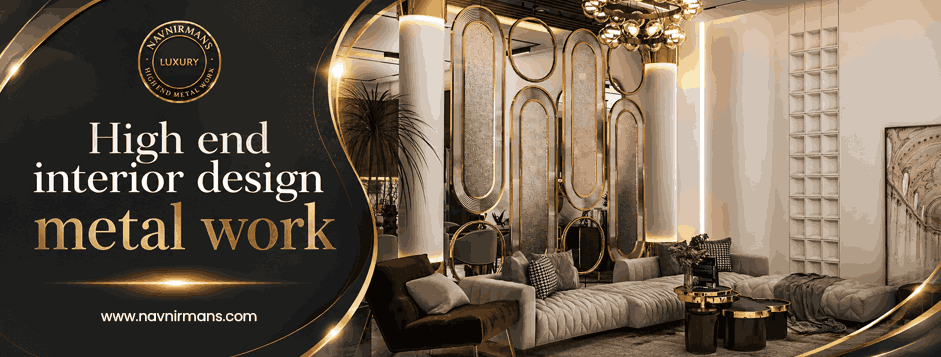
Modern luxury increasingly focuses on individuality and craftsmanship rather than simply displaying expensive materials. Current interior trends also show growing interest in tactile metalwork, sculptural details, and aged finishes that add personality to interiors. This makes custom metalwork particularly valuable. Instead of selecting mass-produced elements, designers can create pieces that respond specifically to the dimensions, architecture, colour palette, and personality of a space.
The Beauty of Bespoke Metal Design
The greatest advantage of high end interior design metal work is customisation. A bespoke metal installation can be designed around a specific room rather than forcing the room to accommodate a standard product. This approach allows designers to experiment with proportions, curves, geometric patterns, surface treatments, and intricate detailing.
For example, a sweeping metal staircase can become the centrepiece of a contemporary villa. A handcrafted brass partition can subtly separate a dining area from a living room. Similarly, a sculptural metal console can function as furniture while also acting as an artistic statement. Bespoke fabrication can combine traditional craftsmanship with modern production techniques, allowing intricate designs to achieve both aesthetic precision and functional performance.
Materials That Define Sophisticated Metal Interiors
Different metals create completely different visual personalities. When you buy duco paint railing for stairs, it plays an important part in the design process.
Brass
Brass brings warmth and elegance into an interior. Its golden undertones work particularly well with marble, wood, stone, velvet, and other premium materials.
Brass can be used for furniture details, partitions, decorative panels, lighting fixtures, handles, trims, and architectural features.
Bronze
Bronze offers a deeper and more sophisticated appearance. Its rich tones can create a sense of heritage while still working beautifully in contemporary interiors.
It is especially effective when designers want an interior to feel luxurious without looking overly polished.
Stainless Steel
Stainless steel creates a cleaner and more contemporary aesthetic. Its sleek appearance works well in modern residences, hospitality spaces, kitchens, staircases, and architectural installations.
Specialised finishes can further alter its appearance, allowing designers to achieve a more understated or dramatic result.
Copper
Copper introduces warmth and visual richness. Its natural colour can become a striking feature in contemporary interiors, particularly when paired with neutral stone, timber, or darker surfaces.
The choice of metal should ultimately complement the broader material palette rather than compete with it.
Creating Statement Staircases and Railings
One of the most impressive applications of interior metalwork is staircase design. A staircase is naturally architectural, but custom metal fabrication can turn it into a sculptural focal point. Designers can experiment with floating structures, curved forms, geometric railings, perforated panels, and artistic balustrades.
The railing itself can become a design feature. Slim metal lines can create a minimalist appearance, while intricate patterns can add decorative depth. Because staircases combine aesthetics with structural requirements, precision is particularly important. The final result must look elegant while also meeting practical requirements for strength, stability, safety, and installation.
Luxury Partitions and Decorative Screens
Open-plan interiors offer flexibility, but they can sometimes lack definition. Decorative metal partitions provide an elegant solution. Laser-cut patterns, geometric screens, vertical metal fins, and handcrafted panels can divide spaces without making them feel closed.
For example, the process of best metal partition for office buy between a living room and dining area can create separation while allowing light and visual connection to continue through the space. This makes metal partitions particularly useful in luxury residences, hotels, restaurants, retail environments, and premium offices.
Custom Metal Furniture as Functional Art
Luxury interiors often require furniture that feels as individual as the architecture itself. Custom metal furniture can provide that individuality. Coffee tables, consoles, side tables, dining tables, shelving systems, beds, and cabinets can incorporate bespoke metal components designed specifically for the project.
Metal can also be combined with marble, glass, wood, leather, and stone. These combinations create contrast and allow each material to highlight the qualities of the others. A slim bronze frame around a stone tabletop, for instance, can create an understated yet sophisticated appearance. The goal is not to use more metal but to use it with greater intention.
The Importance of Texture and Finish
Metalwork is not defined by material alone. The finish can completely change its character. Polished surfaces create a sleek and reflective appearance. Brushed finishes offer a softer and more contemporary look. Hammered textures introduce craftsmanship and visual depth, while aged or patinated finishes can create a sense of history.
This gives designers considerable creative freedom. Two installations made from the same metal can look completely different depending on how the surface is treated. Precision fabrication is equally important. High-end metalwork requires careful cutting, forming, welding, finishing, and installation to achieve clean joints and consistent detailing.
Metalwork and the Art of Subtle Luxury
Luxury does not always need to be dramatic. In many sophisticated interiors, the most successful metalwork is understated. A thin metallic trim around a doorway, a finely detailed cabinet frame, or a subtle brass insert within a wall panel may have more impact than an oversized decorative feature.
The secret lies in balance. Metal should complement the architecture, furniture, lighting, textures, and colours already present in the room. When every element competes for attention, the interior can feel visually overwhelming. When metalwork is carefully integrated, it creates continuity and refinement.
Why Craftsmanship Matters
The quality of metalwork can significantly influence the final appearance of a luxury interior. Even a brilliant design can lose its impact when fabrication is inconsistent. High-end projects demand accurate measurements, carefully executed joints, uniform finishes, and precise installation. Collaboration between architects, interior designers, fabricators, and contractors is therefore essential.
Experienced metal fabricators can also help transform creative concepts into technically achievable designs. This collaboration becomes particularly important when working with complex curves, unusual dimensions, integrated lighting, or combinations of multiple materials.
The Future of High-End Interior Metalwork
The future of luxury interiors is moving toward greater personalisation. Designers and homeowners increasingly want spaces that feel expressive rather than generic. This creates opportunities for metalwork to become even more artistic and architectural. Sculptural installations, customised screens, integrated furniture, statement staircases, and tactile finishes can all contribute to a distinctive interior identity.
At the same time, modern fabrication technology allows designers to explore complex patterns and forms with greater precision. The combination of technology and craftsmanship is making bespoke metalwork increasingly capable of translating ambitious concepts into real spaces.
Wrapping Up
High end interior design metal work is much more than an architectural finishing element. It can define a room, create visual focal points, improve spatial flow, and introduce a level of individuality that standard décor often cannot achieve. From elegant brass detailing and sculptural staircases to bespoke furniture and decorative partitions, the possibilities are remarkably diverse.
For those looking to bring precision-crafted metal elements into distinctive luxury interiors, Navnirman offers a platform to explore customised design and metalwork solutions. By combining thoughtful design with skilled craftsmanship, we can help transform metal into sophisticated architectural details that complement the character and ambition of high-end spaces.